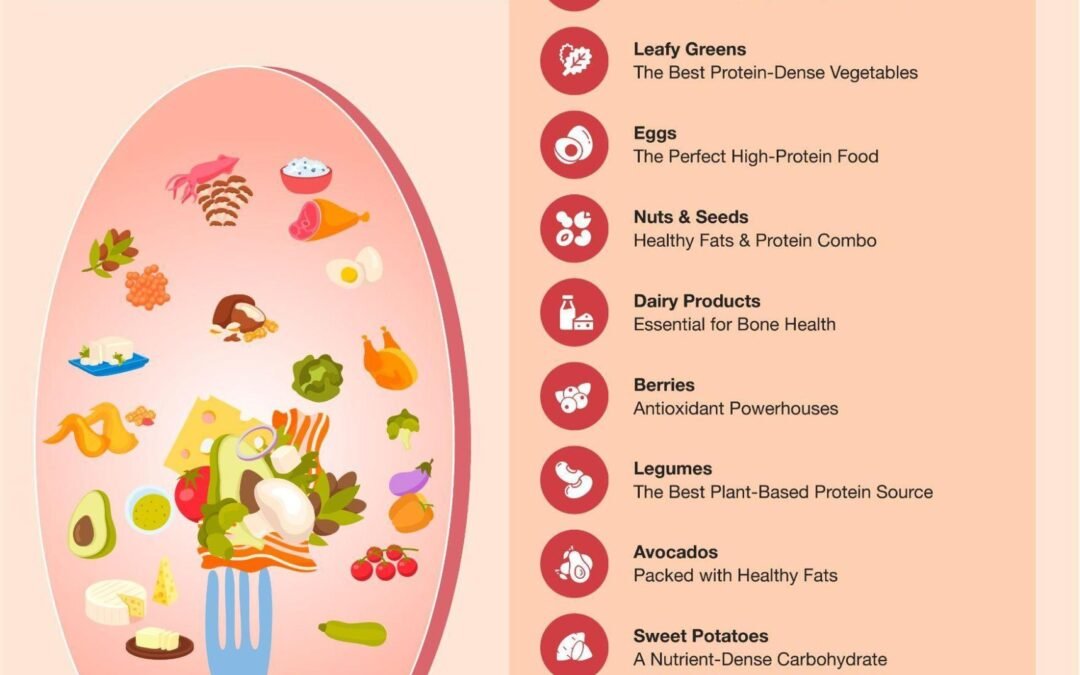
When it comes to building a healthy, balanced diet, it’s not just about counting calories—it’s about making every bite count. Nutrient-dense foods give your body the maximum amount of vitamins, minerals, and antioxidants for the least amount of calories, helping you feel satisfied, energized, and healthy. If you want to get the most from your meals, here are the top 10 nutrient-packed foods you should be eating regularly.
1. Spinach
Spinach is a leafy green superstar loaded with vitamins A, C, and K, plus folate, iron, and calcium. It’s low in calories yet incredibly high in nutrients, making it perfect for salads, smoothies, or sautéed side dishes. The antioxidants in spinach also help protect your cells from damage.
💡 Tip: Add a handful of spinach to your morning omelet or smoothie for a nutrient boost without altering the taste too much.
2. Blueberries
These tiny berries pack a powerful antioxidant punch. Blueberries are rich in vitamin C, vitamin K, and fiber. They help fight inflammation, support brain health, and promote heart health. Their deep color comes from anthocyanins, which have been linked to reduced risk of chronic diseases.
💡 Tip: Keep frozen blueberries on hand to sprinkle on yogurt, oatmeal, or healthy desserts.
3. Salmon
Salmon is one of the best sources of omega-3 fatty acids, which are essential for brain function, heart health, and reducing inflammation. It’s also high in protein, B vitamins, and selenium. Opt for wild-caught salmon for the best nutrient profile.
💡 Tip: Grill or bake salmon with lemon and herbs for a simple, nutrient-packed dinner.
4. Eggs
Eggs are nature’s perfect protein, containing all nine essential amino acids. They’re also rich in choline, which is vital for brain health, and contain antioxidants like lutein and zeaxanthin that protect your eyes.
💡 Tip: Don’t skip the yolk—it’s where most of the nutrients are.
5. Sweet Potatoes
Packed with beta-carotene, sweet potatoes are excellent for eye health, immunity, and skin. They’re also high in fiber and vitamin C, which support digestion and immunity.
💡 Tip: Swap regular fries for oven-baked sweet potato wedges for a healthier side dish.
6. Almonds
Almonds are rich in healthy fats, vitamin E, magnesium, and fiber. They support heart health, help control blood sugar, and keep you full longer. Just remember to keep portions in check because they’re calorie-dense.
💡 Tip: Snack on a small handful of raw almonds or add them to salads for crunch.
7. Greek Yogurt
Greek yogurt is an excellent source of protein, probiotics, and calcium. It supports gut health, strengthens bones, and helps keep you satisfied. Choose plain, unsweetened yogurt to avoid excess sugar.
💡 Tip: Sweeten naturally with fresh fruit and a drizzle of honey.
8. Broccoli
Broccoli is a cruciferous vegetable rich in vitamin C, vitamin K, fiber, and sulforaphane, a compound with cancer-fighting properties. It’s also a great source of plant-based calcium.
💡 Tip: Steam or roast broccoli to preserve its nutrients while keeping its flavor intact.
9. Quinoa
Quinoa is a gluten-free whole grain that contains all nine essential amino acids, making it a complete plant-based protein. It’s also rich in magnesium, manganese, and fiber.
💡 Tip: Use quinoa instead of rice for a protein-packed side dish.
10. Avocado
Avocados are loaded with heart-healthy monounsaturated fats, potassium, fiber, and vitamins C, E, and K. They support skin health, brain function, and heart health.
💡 Tip: Spread avocado on whole-grain toast or add slices to salads and sandwiches.
Why Nutrient-Dense Foods Matter
Eating nutrient-dense foods ensures that you’re fueling your body with everything it needs—without empty calories. They can help prevent nutrient deficiencies, improve energy levels, support healthy weight management, and reduce the risk of chronic diseases.
The beauty of nutrient-dense foods is that they work together to support overall health. For example, pairing vitamin C-rich foods (like spinach or broccoli) with iron-rich foods (like quinoa or eggs) can boost nutrient absorption.
Final Thoughts
A balanced diet is not about perfection—it’s about consistency and variety. By incorporating these 10 nutrient-dense foods into your daily meals, you’ll not only enjoy delicious flavors but also set your body up for long-term health.
✅ Challenge for you: Try adding at least three of these foods to your meals this week and notice how you feel—more energized, satisfied, and healthy.